
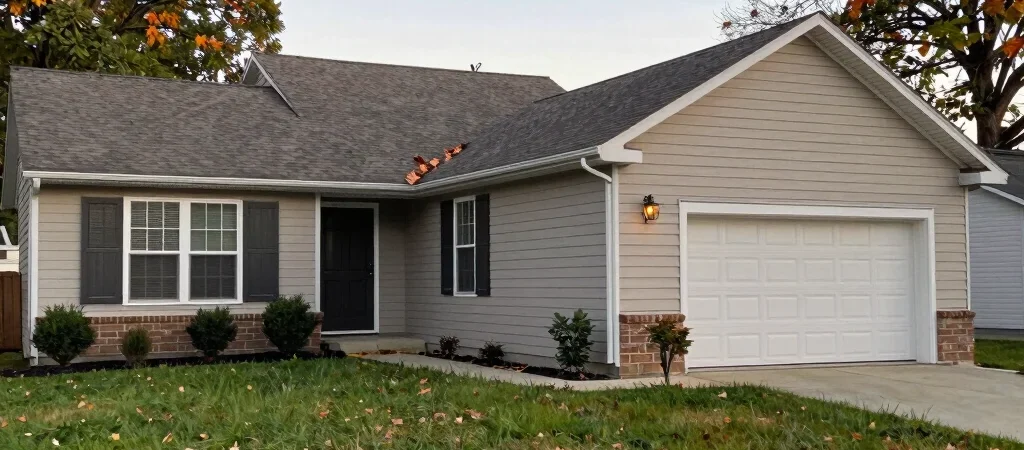
After a windy fall storm or spring thaw, it is natural to want a closer look at the roof. Resist the urge to climb up for a quick inspection: roof edges, wet surfaces, and ladders all introduce risks that a visual check does not justify. Start from the ground, then look inside only if the attic is safely accessible.
Scan the roofline safely
From the yard, look for a visibly missing or displaced shingle, bent flashing, a sagging roofline, or debris gathered in a valley. Binoculars can help you see details without leaning a ladder against the house. Avoid inspecting during wind, rain, icy conditions, or while standing beneath an area where loose material may fall.
Check for signs indoors
If the attic has safe, ordinary access, look for fresh-looking stains on the underside of the roof deck, damp insulation, or daylight where it should not appear. Do not step onto exposed joists or move insulation to reach a suspicious spot. A stain may have more than one possible source, so note its location and whether it changes after rain rather than assuming the roof is the cause.
Record changes and call
Take photos from the same ground-level viewpoints each season and compare them for visible changes. Contact a qualified roofer if you see displaced materials, recurring interior stains, or a sagging area; an inspection on the roof is a job for someone equipped to do it safely. For a seasonal reminder, pair this check with clearing leaves from gutters only when you can do so safely, or arrange professional maintenance.