
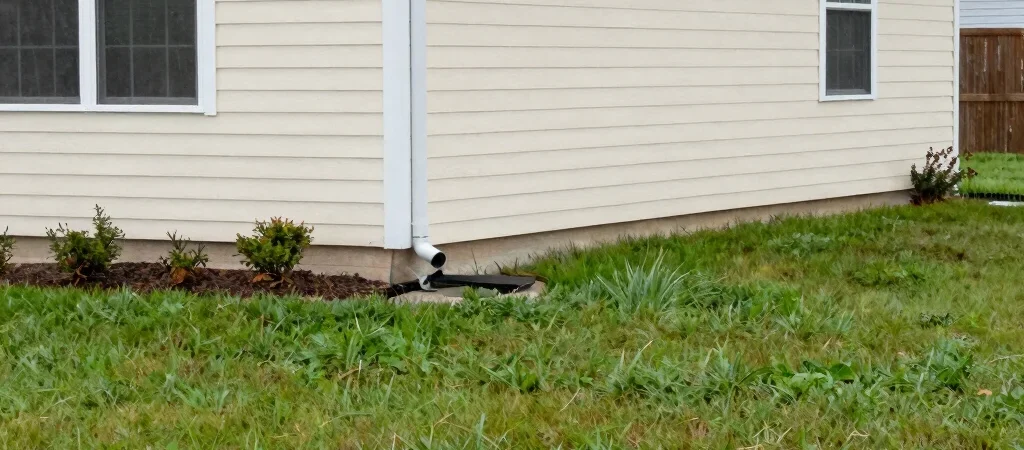
A puddle beside the foundation does not automatically mean the soil needs to be built up. First notice where water comes from, where it collects, and how long it remains after rain. Following that path is more useful than making a quick change that could send runoff toward a neighbor or another part of the house.
Start after a steady rain
From a safe walking area, look for downspouts that empty near the house, low spots beside the foundation, and water crossing a walkway or driveway. Note whether the same area collects water after more than one storm; one unusually heavy downpour may not show the usual pattern. Keep clear of fast-moving water and avoid stepping into a flooded area where the surface or footing is uncertain.
Check the visible connections
Look for a downspout that has come loose, a splash block that has shifted, or an extension that ends beside the foundation. Check that gutters are not visibly overflowing during rain, since a blocked or damaged section can send water down the wall. Do not direct runoff onto a neighboring property, across a public path, or toward a window well.
Know when to get help
If water repeatedly reaches the basement, appears to enter through a wall, or leaves a persistent soggy area, record the location and conditions and speak with a qualified drainage or foundation professional. Significant grading changes can affect where water flows, so avoid adding soil until you understand the existing slope and where the runoff will go. A useful first step is to take a few photos during and after the next rain, from the same safe spots.